
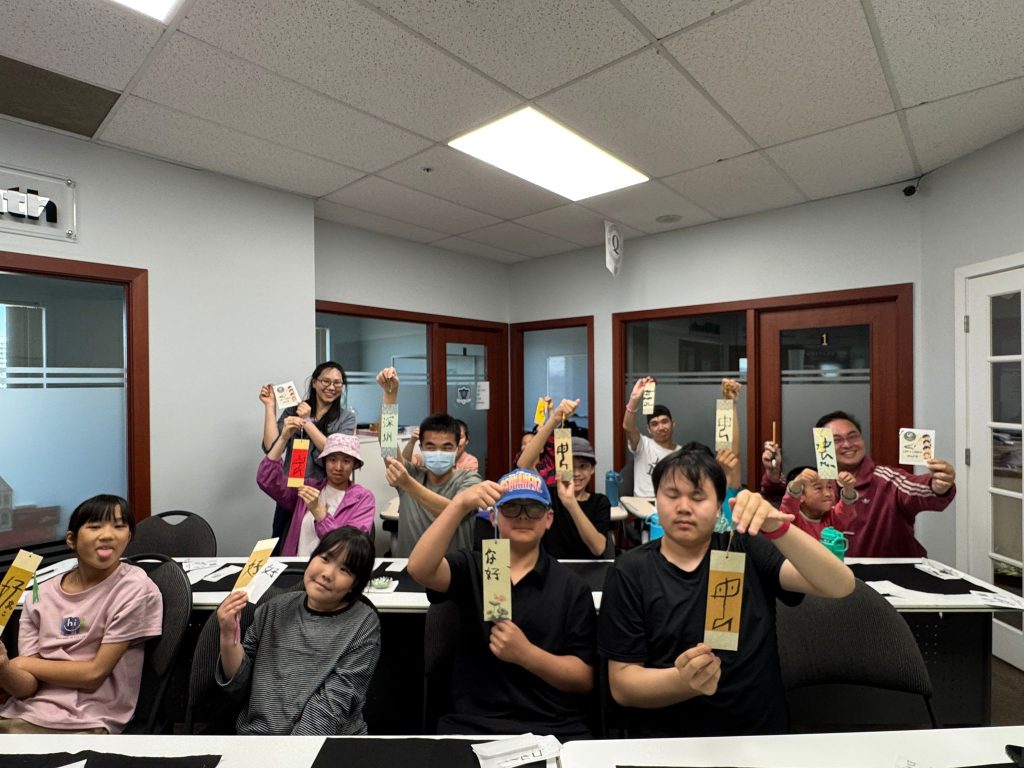
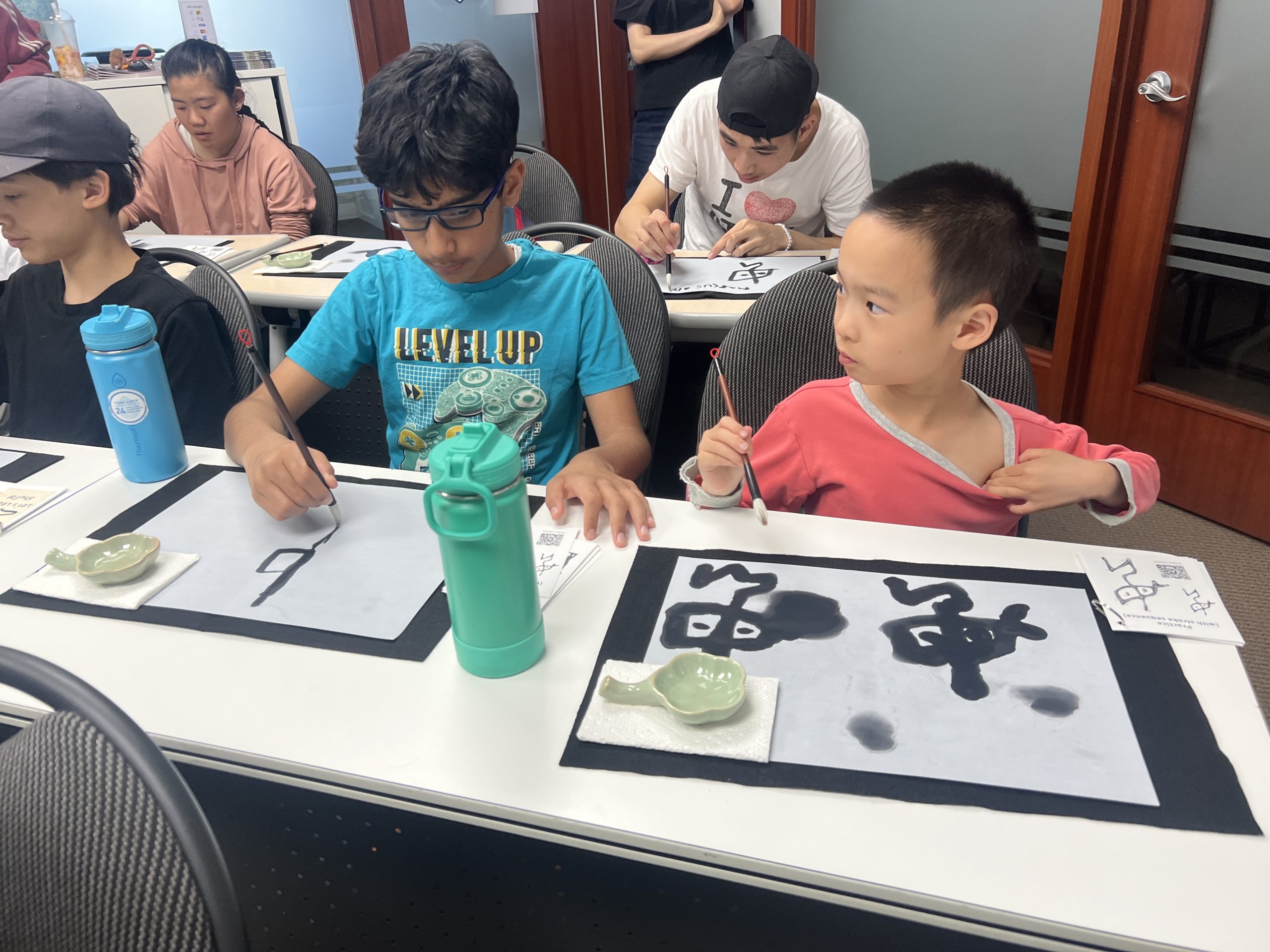
On May 3rd, Teresa and Patrick ran a Shufa workshop for a group of youth through SDC Foundation in Vancouver. Though it was our first session with SDC, it was so memorable that we wanted to document this experiential learning event and what it showed us about bringing Shufa into community settings.
About SDC Foundation
The Social Diversity for Children (SDC) Foundation is a Greater Vancouver non-profit organization running programs for youth with diverse learning needs. Their participants include young people with autism, ADHD, and other learning differences. When we explore ideas about running a workshop together, it was a perfect alignment with our Shufa Foundation’s vision, which is to empower our local communities through experiencing the holistic benefits of Shufa.
An Afternoon with Brushes and Ink
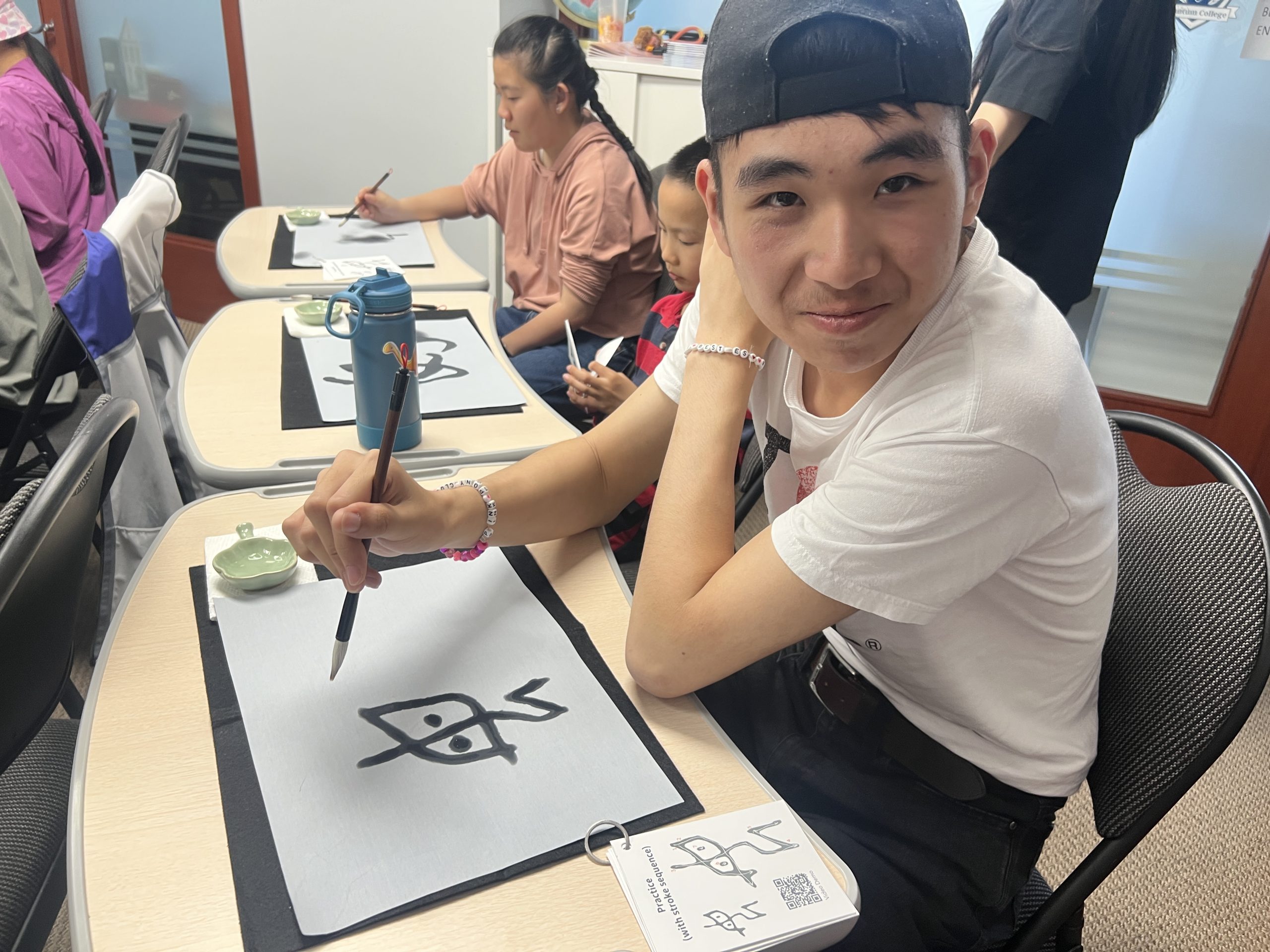
We set up brushes, ink, and Xuan paper for a group of participants ranging in age from six to nineteen. The session wasn’t structured like an art class. There were no grades, no techniques to master, no pressure to produce something polished. The starting point was simply to pick up the brush, feel the ink, and make a stroke.
Most participants settled into the activity fairly quickly. The flowing motion of brush on paper has a naturally grounding quality and the participants were able to focus so well. We were happy to see the participants staying engaged through the session, even when some of them did not know any Chinese! Although a few kids needed more time to become familiar with the session, the safe space we held for them encouraged them and they had lots of fun exploring with great questions and actions!
By the end, parents said the session had done what they’d hoped: helped their child slow down, try something new, and make something with their own hands.
Why Shufa Works for a Range of Learners
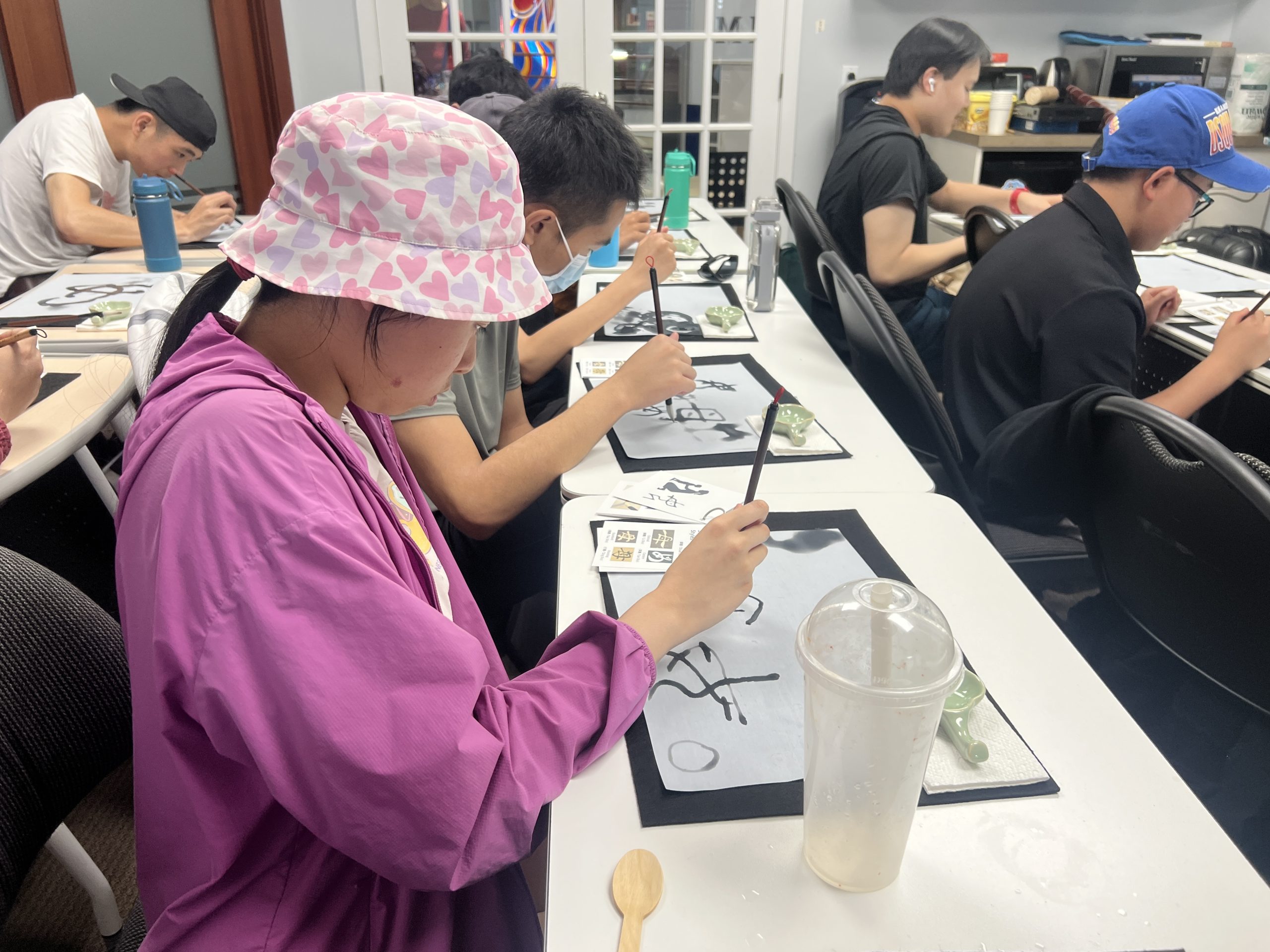
Shufa doesn’t require language ability, prior art experience, or cultural background. The physical act of holding a brush, loading it with ink, completing a stroke gives the nervous system something concrete and manageable to do. There’s no wrong outcome for any given stroke, which removes a lot of the performance pressure that makes other activities difficult for neurodiverse learners.
The tactile quality of the tools matters too. For youth with sensory sensitivities, the weight and texture of the brush and the flow of the ink can themselves become a point of focus. And because each stroke or character is visually clear on the paper, especially when it’s something the participant made, there’s a built-in sense of accomplishment that doesn’t depend on comparison to anyone else.
A First Step, and What It Points Toward
Thanks to this invaluable pilot experience, we have a much more concrete picture of what Shufa can look like in a community setting with neurodiverse youth.
We now envision to bring Shufa into more programs like this: Schools, social service organizations, community centres, or anywhere looking for a low-barrier, evidence-grounded mindfulness activity. If you run a program and want to explore a partnership for a one-off workshop or longer term programs, we’d like to hear from you.
Thanks to SDC Foundation for the invitation, and grateful to all the wonderful kids who picked up a brush that afternoon with us!
Join the Shufa Community
If you’re curious about what Shufa can offer your community, whether you’re an educator, a parent, a program coordinator, or simply someone who wants to explore mindfulness through a different kind of practice, come and talk to us, we would love to hear from you!
Visit our Programs page to learn what’s available, or reach out directly to explore a partnership or custom workshop.
Let’s brush and script our future together!